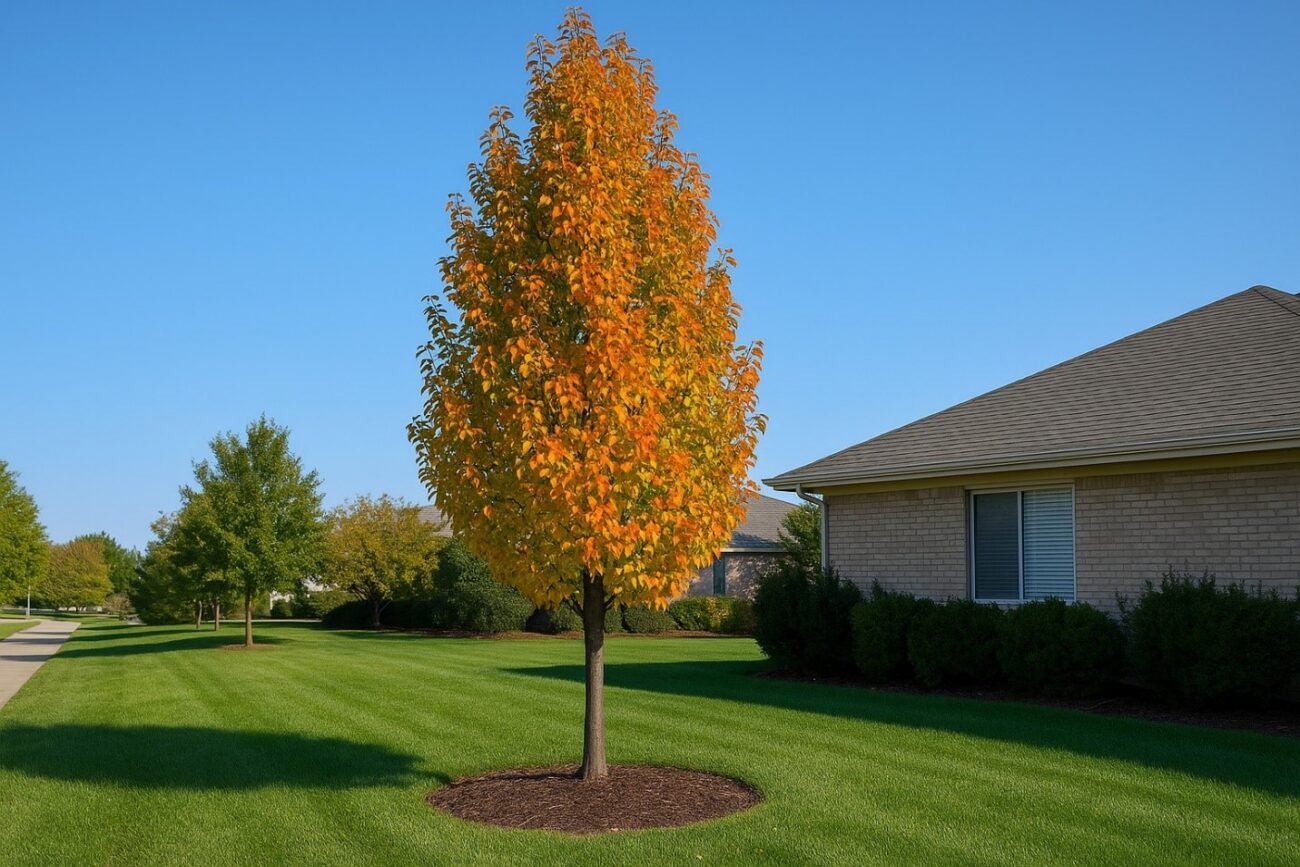
The navigator pear is a small landscape tree known for clean shape, bright leaves, and soft white blooms. Many homeowners choose this tree when they want something neat, strong, and easy to manage. It grows in a narrow form, so it fits well in places where space is tight. People who like calm gardens or simple yard design often use the navigator pear as a main feature.
The navigator pear does not focus on fruit. It is grown for beauty, colour, and structure. In spring, the flowers open in clusters. In summer, the tree forms deep green leaves with a smooth shine. In fall, the colour shifts to warm yellow or orange. This gives the tree a full seasonal look without much effort.
This tree matters for anyone who wants a clean and modern outdoor style. Landscapers use it for walkways, small yards, and front entrances. It works well in many soil types, and it stays strong in cold areas. Gardeners like it because it demands less care than many other pear trees. People who want a neat and upright tree often choose the navigator pear as their first option.
If you are searching for a tree that gives shape, colour, and charm without heavy work, the navigator pear can be the right match. It offers beauty through all seasons and keeps your yard tidy with very simple care.
Origin and botanical background of the navigator pear
The navigator pear comes from a selected pear tree line grown for shape, strength, and steady growth. It belongs to the Pyrus family, the same group as common pears, but this one is made for looks, not fruit. Tree growers developed it as a strong ornamental choice that can live well in cool regions where many trees struggle.
Below are the key points that describe its origin and nature:
- It is known by the cultivar name Pyrus × ‘DurPSN303’
- It was grown by nursery experts who wanted a tree with a narrow and tidy form
- It comes from a hybrid line, which means it carries traits from more than one pear type
- The goal was to create a tree that keeps strong shape even in wind or cold
- It became popular in areas with short summers and long winters because it handles cold very well
The navigator pear grows in a tall and slim shape from an early stage. This trait comes from its controlled breeding. Because of this, it stays upright and does not spread wide like many other pear trees. Its clean outline makes it useful for modern yards, street plantings, and places where space is limited.
In simple terms, the navigator pear has a planned origin. It did not appear by chance. It was shaped with care so it can offer long life, balanced height, and a smooth, elegant look.
Key characteristics and features of the navigator pear
The navigator pear stands out because of its clean shape, strong build, and seasonal colour. Gardeners pick it when they want a tree that looks neat without much effort. Its features stay steady through the year, and the tree holds its form even in rough weather.
Here are the main qualities that define it:
- Narrow and upright shape
The navigator pear grows in a slim, pyramid-like form. It does not spread wide, so it fits well in small yards or next to walkways. - White spring flowers
In spring, the tree fills with small white blooms. The flowers give a soft, bright look that makes the yard feel fresh. - Deep green summer leaves
The leaves stay glossy and clean through summer. They do not look messy, which keeps the tree tidy throughout the warm months. - Warm fall colours
When the weather cools, the leaves turn yellow or orange. This adds warm colour to the yard during fall. - Strong growth in cold areas
The tree lives well in places with harsh winters. It handles frost better than many other ornamental pears. - Low fruit production
The navigator pear is not grown to give fruit. It may make small fruit in rare cases, but the main purpose is beauty, shape, and structure. - Good soil tolerance
It survives in many soil types, even in soils with higher pH. This makes it easier for homeowners who do not have perfect soil.
The navigator pear keeps a clean and graceful silhouette from spring to winter. This is why many landscapers use it as a feature tree or as part of a straight row along driveways or paths.
Planting, care and maintenance tips for navigator pear
The navigator pear grows well when the planting spot is chosen with care. This tree likes light, open space, and soil that drains water without staying heavy. When planted the right way, it settles fast and keeps its shape for many years.
Planting guide
These simple steps help the tree start strong:
- Pick a place with full sun
- Use soil that does not hold too much water
- Dig a hole a little wider than the root ball
- Keep the base of the trunk level with the ground
- Fill the hole and press the soil gently
- Water deeply after planting
- Add a thin layer of mulch around the trunk, leaving space so bark stays dry
Care routine
The navigator pear does not need heavy work. A steady routine keeps it healthy:
- Water the tree in dry months
- Keep the area around the trunk clean
- Add light fertilizer in early spring if the soil feels low in nutrients
- Check leaves and branches for stress or damage
Seasonal maintenance
Each season has small tasks that support strong growth:
- Spring: Look for fresh leaves and blooms, trim broken twigs
- Summer: Water during heat, watch for pests
- Fall: Remove weak branches, enjoy warm leaf colour
- Winter: Light pruning to shape the tree and remove dead wood
Extra notes for long life
- Avoid planting too close to buildings or fences
- Do not let soil stay soggy
- Keep the shape clean by removing branches that rub or cross
The navigator pear responds well to simple care. With steady watering, clean pruning, and good soil, the tree stays neat, upright, and bright through the year.
Benefits and drawbacks of choosing a navigator pear
The navigator pear is popular because it gives beauty, shape, and colour without much work. Many homeowners like it for clean design and steady growth. Still, every tree has strengths and limits, so it helps to know both before planting.
Benefits
These points show why many people pick the navigator pear:
- Neat shape
The tree grows in a narrow form that keeps the yard clean and balanced. - Seasonal colour
White spring flowers, deep green leaves in summer, and warm fall tones give the tree charm through the year. - Good for small spaces
Its slim shape makes it easy to place near walkways, entry areas, or tight yards. - Low maintenance
The tree does not need heavy pruning or special care. A simple routine is enough. - Cold strength
It handles cold climates well, which makes it useful in regions with long winters. - Stable growth
The trunk stays straight, and the branches form in a tidy pattern.
Drawbacks
A few things to consider before planting:
- Very little fruit
This tree is not meant for harvest. If someone wants eating pears, this is not the right choice. - Possible branch weakness
Some ornamental pears can develop weak spots if not pruned with care, so light yearly shaping helps. - Pests and small issues
Like most pears, it can face small pests. Quick checks during summer keep the tree safe. - Size may still be tall
Even though it is narrow, the navigator pear can grow tall, so it needs enough overhead room.
Final thoughts on pros and cons
The navigator pear is mainly for people who want beauty, shape, and easy care. It offers steady colour and strong form but does not give real fruit for eating. With simple upkeep, it stays clean and bright for many years.
How navigator pear compares with fruit-bearing pears and other ornamental pears
The navigator pear is different from common fruit pears. It is also different from many other ornamental pears. People often mix them because they share the same family, but their purpose and behaviour in the yard are not the same.
Navigator pear vs fruit-bearing pears
Fruit pears are grown for harvest. They focus on fruit size, taste, and storage. The navigator pear focuses on looks and structure.
Here is a clear view:
- Fruit pears need more care
- Fruit pears need pruning for fruit shape
- Fruit pears attract bees and insects during bloom
- Fruit pears drop fruit, which can make the ground messy
- Navigator pear gives almost no fruit
- Navigator pear stays tidy and clean
- Navigator pear needs less pruning
- Navigator pear works better in small or narrow spaces
Fruit trees demand time and steady upkeep. The navigator pear keeps a simple routine and still looks neat. This makes it easier for people who want beauty without the work of a food tree.
Navigator pear vs other ornamental pears
There are many ornamental pear types, but not all have the same strength. Some grow too wide, some break in wind, some spread too fast. The navigator pear offers a more balanced growth pattern.
Key differences:
- Navigator pear has a slimmer shape
- Some ornamental pears grow wide and need more room
- Navigator pear handles cold better
- Some pears struggle in harsh winters
- Navigator pear gives warm fall colour
- Many ornamental pears turn simple yellow
- Navigator pear has cleaner branch structure
- Some pears form weak limbs
Why this comparison matters
People who want a stable, narrow tree often find the navigator pear more useful than other ornamental pears. It stays upright, stays clean, and fits well in areas where space is limited. It also avoids the fruit mess of regular pear trees.
The navigator pear stands as a good middle choice. It has beauty like an ornamental pear and strength like a hardy shade tree, without the maintenance that fruit trees need.
Best uses and landscape design ideas for navigator pear
The navigator pear works well in many yard styles. Its slim shape, straight trunk, and steady colour make it a flexible choice. Homeowners, designers, and builders use it when they want clean lines and a modern look.
Best places to plant a navigator pear
You can use this tree in many spots:
- Along driveways or paths
- Near front doors or entry walks
- In small side yards
- In narrow strips between homes and streets
- In rows for a formal look
- As a single feature tree in a small lawn
Because the navigator pear stays narrow, it fits nicely where other trees feel too big or heavy. It adds height without taking too much ground space.
Landscape design ideas with navigator pear
Some easy design ideas:
- Row planting
Plant several navigator pear trees in a straight line. This creates a formal frame beside a driveway or garden path. - Accent near entrance
Place one tree on each side of a front path. The clean shape guides the eye toward the door and gives a calm, welcoming feel. - Mixed border
Use the navigator pear behind shrubs, grasses, or low flowers. The tall slim tree becomes a backdrop for lower plants. - Patio corner
Plant a navigator pear near a patio corner to add light shade and privacy without blocking all sky view. - Street or sidewalk edge
Because of its narrow crown, it can work as a street tree in some areas, where space is tight and root spread must stay controlled.
Style match for different homes
The navigator pear fits many house types:
- Modern homes that like straight lines
- Small cottages that need one neat feature tree
- Townhouses with narrow front yards
- New builds that need quick, clean landscape structure
The navigator pear gives height, order, and soft colour. With simple planning and the right placement, it can turn a plain yard into a tidy and stylish outdoor space.
Troubleshooting common issues with navigator pear
The navigator pear is easy to care for, but it can still face small problems. Most issues show up in the leaves, branches, or soil. When you know the early signs, you can fix the problem before the tree weakens.
Common problems and simple fixes
- Yellow leaves
This often happens when the soil stays wet for too long. The roots do not like heavy, soggy ground.
Fix: Improve drainage, water less often, and loosen soil around the root line. - Leaf spots
Small dark spots can appear during warm, humid weather.
Fix: Clear fallen leaves, give the tree space for air, and keep the area clean. - Slow growth
The tree may grow slowly if soil is low in nutrients or if the roots face stress.
Fix: Add light fertilizer in spring and check that the planting depth is correct. - Branch cracks or weak limbs
This can happen if the tree grows long branches with no support or if winter snow becomes too heavy.
Fix: Trim weak limbs during winter and shape the tree so the structure stays strong. - Pests
Small insects like aphids may gather on young leaves.
Fix: Rinse leaves with water or use gentle garden soap.
Signs that need attention
Look for these early clues:
- Leaves turning pale
- Bark peeling in small strips
- Branch tips drying
- Soil staying wet for many days
- Small insects sitting under leaves
These signs do not mean the tree is in danger. They only show that the tree wants a small care change.
Keeping the navigator pear healthy long-term
A simple routine helps avoid most problems:
- Water only when needed
- Keep mulch away from the trunk
- Remove broken branches
- Keep soil loose around the base
- Check leaves once in a while
The navigator pear stays strong when basic care is done early. With simple steps, the tree keeps its clean shape and bright colour for many years.
Conclusion
The navigator pear is a good choice for anyone who wants a clean and steady tree that brings colour through the seasons. Its slim shape, bright spring blooms, and warm fall tones make it a strong feature in small and large yards. It does not ask for heavy care, and it stays stable even in cold regions, which makes it helpful for people who want beauty without stress. With simple watering, light pruning, and good soil, the tree keeps its shape and charm for many years.
This tree is right for you if you want a narrow, tidy tree that fits well in tight spaces and gives your yard a neat look. It is not the best match if you want fruit for eating, but it is perfect if you want structure, colour, and an easy routine. The navigator pear brings calm style to any outdoor space and works well for homeowners, designers, and anyone who enjoys a simple but attractive landscape tree.
FAQ’s:
What is a navigator pear tree?
The navigator pear is an ornamental tree grown for shape, colour, and clean form. It is slim, upright, and known for white spring flowers and warm fall tones.
Does the navigator pear grow real fruit?
It may grow small fruit in rare cases, but it is not a fruit tree. It is planted mainly for looks, not for eating pears.
How tall does a navigator pear get?
Most navigator pear trees grow medium height. They stay narrow, which makes them useful in small yards or next to walkways.
Is the navigator pear easy to care for?
Yes. The tree needs simple care like watering during dry weeks, light pruning in winter, and clean soil around the base.
Can the navigator pear grow in cold areas?
Yes. This tree handles cold weather well and stays strong in places with long winters.
Does the navigator pear drop a lot of mess?
No. Since it makes very little fruit, it stays tidy. Leaves drop in fall like any tree, but it does not create heavy yard waste.
Where is the best place to plant a navigator pear?
It grows well in sunny spots with soil that drains water. People use it near driveways, front doors, patios, and narrow yard spaces.
Enjoyed reading? Visit Pure Style Magazine for more unique and helpful content.
Disclaimer
This article shares general information about the navigator pear. It is not professional gardening or landscaping advice. Tree results can change based on soil, climate, and care. Please check with a local plant expert for guidance based on your area. Use this content for learning only.
